Round 56 - Roadside Attractions

This week the girls take aim at Roadside Attractions... 


What is our fascination with roadside attractions? Is it the boredom on long road trips that makes look at something on the side of the road and say "ok we are stopping here"? We don't know. Join us on our journey to some roadside attractions we can't wait to get out and see. 

But first, what were we drinking?


Sarah was drinking West Coast Coolers
Available from Dan Murphy's

Amy was drinking Lazy Sunday Pinot Gris

Available from Naked wines

Bianca was drinking Baileys


Available from Liquorland

Sarah kicks us off explaining just what a roadside attraction is and why we love them. She also tells the tales of two roadside attractions.

The first one she talks about is the Angel of the North which is a giant statue of an Angel on top of a hill in England. 


The second one was the world's largest Cuckoo Clock in Germany and although we may still be a little confused about its size and dimensions we can all agree that it's super cute.


Amy wasn't sure what to cover this week since she loves a good roadside attraction. In the end, she settled on giant things from around Australia. 

Each state and territory in Australia has many giant things like there is some sort of unspoken competition going on. In fact, Australia has over 150 giant things and its own Wikipedia page which lists them all. 

The Australian Capital Territory (the ACT) doesn't seem to want to compete and has a giant mushroom and a giant pear as well as others that were not note-worthy.

New South Wales is home to the Big Banana, the big bogan, and the big Marino to name a few. 


In the Northern Territory, there are many giant artworks that pay homage to Australia's first peoples. NT is also home to the fabulous giant XXXX Beer. 


Queensland is home to a giant barrel that is home to the Bundaberg Rum Shop. Queensland is also home to the giant Cassowary, the golden gumboot, the big pineapple, and Matilda the giant kangaroo which is the retired mascot from the 1982 Olympics.


In South Australia, we have the giant ant (Bianca's nightmare), the giant rocking horse, a giant bottle of wine, and one for Sarah - the giant Santa.


Tasmania sort of participates in the silliness of giant things by having the big coffee pot, the big penguin, the big platypus, and the big spud. However, they don't seem to be as invested as the rest of us. 

In Western Australia, they missed the brief, and their giant things don't make much sense. They have the giant periodic table, the world's tallest bin, and a big cricket bat. 

Finally, in our home state of Victoria, we are home to the big abalone (where Sarah goes to make her sandwiches). The big Seat, big cows, two big koalas, and a giant Sphinx which houses a restaurant Sarah and Bianca went to. 


Bianca dug up a few whimsical attractions for y’all

Gnomesville
Lawn gnomes are a classic symbol of kitschy yard decorations, but most people are content to have just one of the little creatures posted up in their yards. Australia’s Gnomesville, a collection of thousands of the weird little statuettes set up on a roundabout is a whole different beast entirely.

The community of silent dwarves actually began as a whimsical protest some 20 years ago. As the Gnomesville website explains, a small bit of land in Ferguson Valley was annexed by the local government to create a roundabout. Despite an outcry from the nearby residents, the roundabout was installed, and tensions simmered. Then at some point, a gnome appeared. At first, there was just one in a tree hollow, but after a few months, there were around 20. The collection continued to grow as visitors and locals alike came and dropped off their own little statues.

In the decades since their first appearance, the army of gnomes had exploded into the thousands. For a time, theft and vandalism stunted the growth of the little population, but today the site is fairly well respected and continues to grow as people bring their own gnomes to add to the community.

There are so many gnomes now in Gnomesville, that in some spots they are even grouped up into little neighborhoods, where gnomes of the same color or attitude are placed together. Visit Gnomesville, but be sure to bring a new resident.


Next was...

Tasmazia and the Village of Lower Crackpot
This self-proclaimed "largest maze complex in the world” is a quirky family attraction in Tasmania’s Promised Land, backdropped by the picturesque Mount Roland. While sometimes classified as a theme park, this description doesn’t quite fit. There are no rides; in fact, there really isn’t anything mechanical or electric at all. Tasmazia is essentially a large maze, with other mazes nestled inside. 

Aside from the Great Maze, one of the world’s largest botanical mazes, the mazes include the Hampton Court Maze, the Yellow Brick Road Maze, the Hexagonal Maze, the Cage, the Irish Maze, the Confusion Maze, and the Balance Maze. 
One of the main attractions at the park is the eponymous Village of Lower Crackpot, a quaint miniature village built to one-fifth scale. The Embassy Garden is another set of model buildings and icons representing locations around the world, or, in some cases, representing other worlds in the form of the buildings dedicated to intergalactic and time travel.

A quirky, occasionally subversive, sense of humor is present throughout the park. The Village of Lower Crackpot includes the “School of Lateral Thinking” and interplanetary balloon aviation. A monument to whistle-blowers can be found in the Embassy Garden.

Other features of the park include Cubby Town (a cluster of mini-buildings that kids can enter), Lower Crackpot’s Correctional Centre (an assortment of punishments such as faux stocks and a guillotine), and the Three Bears’ Cottage. The park also includes a working lavender farm, which is in full bloom in January.

This location is off the beaten path, even for Tasmania. Consider combining your visit with a visit to Cradle Mountain and Mole Creek's Marakoopa Cave glow worm tour. Sheffield, Tasmania's "Town of Murals" is also nearby and has several restaurant options.


and lastly...

Grandad's Magical Wonderland
There once was a patch of public land in a Newcastle suburb that lay neglected and forgotten. Where others saw overgrown grass and untamed brambles, a man named Merv Moyle saw a wild jungle of exotic flowering trees and mythical creatures hiding in the foliage. A lifelong gardener, Moyle began to transform the neglected patch, planting palms and azaleas and ferns, stringing up garlands of roses, and laying winding stone pathways through his little oasis.

As the garden grew and blossomed, the once dreary space filled with bright colors and extraordinary magic as beautiful fairies and wondrous beasts arrived in droves, making their new homes in the knots of the trees, in the shade of the palm fronds, and under the caps of giant toadstools.

Only a child at heart could summon such fantastical beings, and that is exactly what the late Merv Moyle was. Begun in 1970 as a play area for his daughters, the fairy garden quickly grew into something larger. It became a beloved destination for both the children and adults of Newcastle, a peaceful place to escape from city life and discover all manner of creatures— from gorillas to dragons and, of course, fairies—along its leafy pathways. Over the years, the garden grew to include a pet cemetery, a barbecue pit, several seating areas for tea parties, and a special mailbox for the Fairy Queen herself. 

Moyle continued to maintain the garden until his passing in 2018 at the age of 94. Today, Moyle’s daughters and local volunteers continue his work, ensuring that everyone, from the young to the young at heart, can enjoy the garden and its magical inhabitants for many years to come.

Grandad's Magical Wonderland is free to visit and open to the public. Within the garden is the Fairy Queen's mailbox, where visitors can leave the Fairy Queen letters. If you would like to receive a response from the Fairy Queen, please leave a self-addressed stamped envelope in the mailbox. 


HELP KEEP US HYDRATED
AKA Karma Points



Round 55 - Famous Last Words

This week the girls take aim at Famous Last Words... 


The last words uttered by a person before they die are special to those who hear them. However, in some cases, they are simply hilarious and this week we celebrate some famous last words...

But first, what were we drinking?

Bianca was drinking Tobacco Road Merlot


Available from BWS

Sarah was drinking nothing, it's ok not to drink (especially when your doctor says not to).

Available from home.


Amy was drinking Wiley Rooster Merlot


Available from Naked wines

Bianca introduced the topic this week with a few famous last words that are often mondegreened... you know how we all love a mondegreen. 

First off:

Johann Wolfgang Goethe 

Who Was He: Johann was a German poet, playwright, novelist, scientist, statesman, theatre director, and critic. His works include plays, poetry, literature and aesthetic criticism, and treatises on botany, anatomy, and color. He is considered to be the greatest German literary figure of the modern era. 

”More light!”(”Mehr licht!”) 

Throughout his life, Johann Wolfgang Goethe was often fascinated by the physical and philosophical effects of the light on human beings. This may lead us to believe, that it was a last plea for greater enlightenment before his death, however, these alleged last words of Goethe, were a result of misinterpretation. Moments before his death, Goethe actually said: "Please open the second window of the bedroom so that more light can enter."

And secondly, Bianca had:

Gaius Julius Caesar 

Who Was He: Roman general, statesman, and consul 

“And you too, Brutus?”(”Et Tu, Brute?”) 

Although this sounds like the perfect dramatic thing Julius Caesar could say moments before his brutal death, the truth appears to be more prosaic. According to historical evidence, he never said these famous last words at the moment of his assassination. 

The ancient Roman historian Plutarch reports, that Caesar didn’t say anything and just pulled his toga over his head when he saw Marcus Brutus in the group of conspirators. The fame of this alleged Caesar’s quote is mostly attributed to its occurrence in the theatrical play Julius Caesar, by William Shakespeare, written in 1599. 

Thirdly:

Nero Claudius Caesar Augustus Germanicus 

Who Was He: Roman Emperor 

“What a great artist the world loses in me!”(Qualis Artifex Pereo!) 

Emperor Nero, who lived during the Imperial era of ancient Rome, indeed considered himself a great artist. Apparently for that were these last words attributed to Nero by the ancient Roman historian Suetonius. 

In reality, Nero, when he was finally found by the Praetorians in the puddle of his own blood, had already slashed his trachea and was so weakened by his unsuccessful suicide attempt, that he probably managed only to incoherent babbling sounds. 

In addition, according to numerous writings by his biographers, his alleged last words were not “What a great artist the world loses in me!”, but instead ”What a fidelity!”, after one of the centurions removed the dagger from his wound, and tried to stop bleeding with his tunic. Nero didn’t know, that the centurion had been ordered to bring him to the jury alive. 

And Lastly:

Dylan Thomas 

Who Was He: Welsh poet and writer 

“I’ve had 18 straight whiskies. I think that’s the record!” 

Famous Welsh poet Dylan Thomas reportedly said these words. However, according to available witnesses, he didn’t say them on the day of his death, but right after he returned from his last bender in Hotel Chelsea, New York. He died a few weeks later, as a direct result of his long-term alcohol abuse. 

Then Bianca moved on to some funny famous last words;

James French, convicted murderer (before his execution)
“Hey fellas! How about this for a headline for tomorrow’s paper? ‘French fries!'” 

Chico Marx
Leonard Joseph "Chico" Marx was an American comedian, musician, and actor. He was the oldest brother and a member of the Marx Brothers
“Remember, Honey, don’t forget what I told you. Put in my coffin a deck of cards, a mashie niblick*, and a pretty blonde.” 

*Bianca was most upset to find out that a "mashie niblick" is a golf club and not a snack.

John Sedgwick, general of the Union Army (as he was shot mid-sentence) 

“They couldn’t hit an elephant at this dist—” 

Humphrey Bogart, actor
“I should have never switched from scotch to martinis.” 

Voltaire, philosopher (after a priest asked if he wished to denounce Satan)
“Now is not the time for making new enemies.” 

W.C Fields, actor (when asked why he was reading the Bible)
“I’m looking for loopholes.” 

And lastly, the reason Bianca suggested this topic;

Thomas de Mahy, marquis de Favras (March 26, 1744 – February 19, 1790) was a French aristocrat and supporter of the House of Bourbon during the French Revolution. Often seen as a martyr of the Royalist cause, Favras was executed for his part in "planning against the people of France" under the Comte de Provence. His last words which he said deadpan to the judge upon reading his death sentence warrant. 

"I see that you have made three spelling mistakes," 

A grammar nazi Bianca can relate to wholeheartedly. 

Amy started her research by googling famous last words and like her co-hosts, she found many funny ones. However, it was the last words of a famous Jazz drummer, Buddy Rich, which struck a chord with her. 

This lead Amy to do some research on the life of this famous drummer and she discovered that she shared many personality traits with Buddy. Buddy's last words expressed his detest for a certain genre of music which Amy also doesn't like so she felt a kinship with the late drummer. 


Amy also discussed the last words of Mr Thomas Grasso. Grasso was a convicted murderer who was sentenced to death in Oklahoma in 1995. Mr Grasso ordered an unbelievable amount of food for his last meal which the girls discuss concluding that together they may be able to get through it all. However, there was one item that Mr Grasso did not receive as requested and his last words expressed his frustration at not receiving the item.


Sarah couldn't decide on just one or two sets of famous last words. After reading through some amazing articles on the internet she decided to pay her respects to many.

Sarah discussed the last words of famous people such as Elvis Presley, Jean-Paul Sartre, Nostradamus, Marie Antoinette, Leonardo Da Vinci, Joan Crawford, and Sir Winston Churchill.


HELP KEEP US HYDRATED
AKA Karma Points


Round 54 - Better than the original

This week the girls take aim at things that are better than the original... 


This week we are taking aim at the world of remakes. Movies, music, TV are all formats that have seen a multitude of remakes. Every now and then you stumble across a remake that is better than the original and tonight we are taking aim at a few....  


But first, what were we drinking?

Amy was drinking R Paulazzo Cabernet Savignon


Available from Naked wines


Sarah was drinking Brown Brothers Moscato Rosè


Available from Dan Murphys


Bianca was drinking brown brown Moscato and sav which she was driving out of her comically large secret life of pets cup!


Available from Liquorland

Amy introduced this week's topic by running through a brief history of remade music and movies. Amy then discussed some fun facts about the most remade movies and some epic flops of remade movies. 

For something different and because she had to leave midway through recording the episode we let Sarah go first this week. 

Sarah chose a couple of songs that she preferred the remake of instead of the originals. These songs included:

Respect by Aretha Franklin 
Nothing Compares 2U By Sinead O'Conner
Killing Me Softly by The Fugees; and 
The Sound Of Silence By Disturbed 

If you like any of these songs please let us know or if you haven't listened to them, give them a listen. Sarah finished her part off with a movie. Sarah declared her love for the movie Titanic made in 1997 and stated in her opinion that this remake was better than the original and other adaptations of the story. Sarah mainly credits the success of this remake to Leonardo Di Caprio. Face it, you cannot beat Di Caprio.     

Amy jumped back in at this point in the show to discuss a movie that she believed was better than the original. Amy's pick was the Stepford wives. The original was made in 1975 then remade in 2004. 

Amy liked the remake better because she thought that the point the movie was trying to make about equality between the genders was better made in the remake. However, Amy accepts that many people (including Bianca) completely disagree with her and she doesn't care.   

2004

1975

Bianca discussed the finer points between the Freaky Friday movies starting way back in the 70s, then to the first remake in the 90s. Coming in next is the 2000s version and bringing up the rear is the 2018 crapulence.

Bianca definitely had a hard time choosing between the 90s and 2000s versions but decided the 90s was her fav and the best remake.

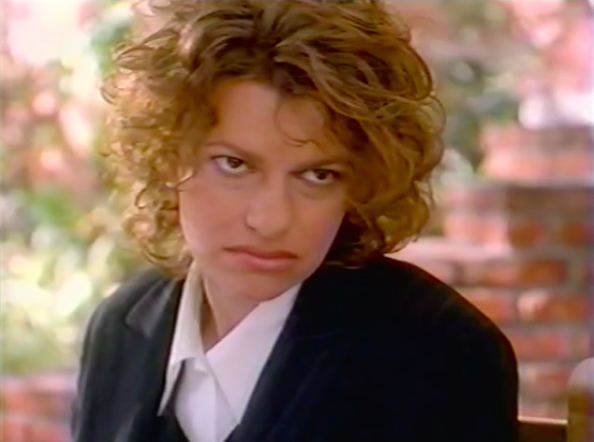
As promised here is Sandra Bernhards best look she has given anyone in any movie ever! The contempt is amazing!


HELP KEEP US HYDRATED
AKA Karma Points


Round 53 - Stockholm Syndrome

This week the girls take aim at Stockholm Syndrome... 


Here at Friday Night Wine Fight, we love a good syndrome. We like it better when there are some really good tales to be told about people with certain syndromes. Tonight we take aim at a one called Stockholm Syndrome. 


But first, what were we drinking?


Sarah was drinking Brown Brothers Moscato & Pino Grigio


Available from Dan Murphy's

Amy was drinking A & R Gentil


Available from Naked wines


Bianca was drinking Choosy Beggars Cabernet Merlot


Available from Liquorland

Sarah opens this week's topic with a bit of background on what Stockholm Syndrome is. The girls were shocked to learn that it is not recognised by some medical practitioners as an actual condition.   

Sarah then shares the heartbreaking tale of Colleen Stan. Colleen Stan developed Stockholm Syndrome after being locked in a box for over three years by her captors. Collen's determination to survive was incredible to hear and we can only imagine what this poor woman went through during her ordeal.

The Box / Colleen Stan & Cameron Hooker

Amy was excited to take aim at this week's topic and decided to dive into the story of Patricia Hearst. Patricia was kidnapped from her home by a local radicalist group. During her time with the group, she decided to take up arms and fight with her captors for their cause. 

Later after the group was arrested by Police Patricia claimed that she was brain-washed and in fear for her life at the hands of the group. Sadly for Patricia, her pleas did not go down well in court and she was sentenced as a member of the group despite being kidnapped by them. Patricia however did receive a pardon for her part in the crimes police allege she committed of her own free will in 2001.
 
Patricia Hearst before and during the kidnapping

Bianca finishes us off this week by recounting the tragic tale of Mary McElroy. Young Mary was kidnapped whilst taking a bath in her father's home in 1933. Mary was 25 at the time of the incident.  

Despite her kidnappers demanding $60,000 for her release, Mary's Kansas City Mayor Father haggled the kidnappers down to $30,000. 

The kidnappers were eventually caught however they gained a supporter in young Mary and she visited them in prison. Unfortunately, Mary was so racked with guilt over the incident she took her own life and in her suicide note begged for her captors to be spared the death sentence they received for her kidnapping.


HELP KEEP US HYDRATED
AKA Karma Points


Round 52 - Nursery Rhymes

This week the girls take aim at Nursery Rhymes... 

Ever listened to a Nursery Rhyme and thought "I wonder how they came up with this?". We all have right? Some Nursery Rhymes sound innocent and charming, especially when being sung by a child however not all Nursery Rhymes are what they appear to be. 

But first, what were we drinking?

Bianca was drinking The Pond Merlot


Available from Aldi


Sarah was drinking Sit Stay Society -  Ruby's Rosè

Available from Dan Murphy's

Amy was drinking R Paulazzo small-batch Pinot Grigio


Available from Naked wines


Bianca opened with the origins of Nursery Rhymes; plague, medieval taxes, religious persecution, prostitution, babies falling from trees, heads being chopped off in central London, animals being cooked alive, since when were these topics deemed appropriate to peddle to toddlers? 

Since the 14th Century, actually. That’s where the earliest nursery rhymes seem to date from, although the ‘golden age’ came later, in the 18th Century.

The roots probably go back even further. There is no human culture that has not invented some form of rhyming ditties for its children. 

Baa Baa Black Sheep commonly misinterpreted as being about slavery and picking cotton is actually about the medieval wool tax, imposed in the 13th Century by King Edward I. Under the new rules, a third of the cost of a sack of wool went to him, another went to the church, and the last to the farmer. (In the original version, nothing was therefore left for the little shepherd boy who lives down the lane). Black sheep were also considered bad luck because their fleeces, unable to be dyed, were less lucrative for the farmer. 

Rock-a-bye Baby refers to events preceding the Glorious Revolution. The baby in question is supposed to be the son of King James II of England but was widely believed to be another man’s child, smuggled into the birthing room to ensure a Roman Catholic heir. The rhyme is laced with connotation: the “wind” may be the Protestant forces blowing in from the Netherlands; the doomed “cradle” the royal House of Stuart. The earliest recorded version of the words in print contained the ominous footnote: “This may serve as a warning to the Proud and Ambitious, who climb so high that they generally fall at last”. 

Ladybird, Ladybird is also about 16th Century Catholics in Protestant England and the priests who were burned at the stake for their beliefs. 

Pop Goes The Weasel is an apparently nonsensical rhyme that, upon subsequent inspection, reveals itself to in fact be about poverty, pawnbroking, the minimum wage – and hitting the Eagle Tavern on London’s City Road. 

the rhyme "Goosey, goosey gander, where do you wander? Upstairs and downstairs and in my lady's chamber" is an allusion to prostitutes - commonly known as geese in the 18th century - and the spread of venereal disease, which was known as "goosebumps" because of the swellings it caused.

 
Amy decided to take aim at Ring a Ring a Rosy, mainly because she thought that the origin of this nursery rhyme was well established. It turns out we were all quite wrong in our belief that this nursery rhyme was about the bubonic plague which ravaged Europe in the 14th century. 

Amy also discovered in her deep dive into this rhyme that there are many variations of the words sung which tend to depend on where you are from. All of the girls were shocked to discover that the second verse doesn't have a documented origin (which Amy could find). If anyone knows the origins of the second verse please let us know!


Sarah finishes the episode off with Nursery Rhymes that you think are about a conversation on gardening but may actually be about something a lot darker.  She then goes on to talk about blind mice that may not have been blind or mice, an egg that was actually a cannon, and why the London bridge fell down.


HELP KEEP US HYDRATED
AKA Karma Points


Round 51 - Animal Celebrities

This week the girls take aim at Animal Celebrities... 


Animal celebrities are fascinating to people mostly because we all know that the animal did not choose to be famous, unlike so many humans who would give anything for the limelight. It basically just happened to them. Tonight we take a look at some interesting animal celebrities and what makes them famous...

But first, what were we drinking?

Amy was drinking Wiley Rooster Merlot


Available from Naked wines

Sarah was drinking Sit Stay Society- Ruby’s Rosé
Available from Dan Murphy's


Bianca was drinking On the Grapevine Pinot Grigio


Available from Dan Murphys

Amy introduced this week's topic by discussing how animals become celebrities. The most common ways an animal can become a celebrity is to feature on a TV show or movie, have a famous owner, or become famous for something they have done. Amy gave some examples of animals in each celebrity category then moved on to the animal celebrities she was taking aim at.

Tonight Amy discusses the incredible world of animal celebrities born from social media. Amy was utterly shocked when she discovered that many animals on social media have millions of followers! Some examples on Instagram include:

Grumpy cat - 3.7 million followers
    

Jiff pom - 8.8 million followers

Doug the pug 3.6 million followers
    
Nala the cat 3.7 million followers

Diddy and Yetti Kong - 1 million followers. 

At that point, Amy decided to give a shout-out to our own humble group of 200 followers on Instagram and thank them for following us. 

Sarah filled the middle with the Story of Rin Tin Tin. Rin Tin Tin was a German Sheppard who was found as a newborn puppy in France and ended up being one of the most famous animal actors in America in the 1920s.

Bianca covered the wonderful Mr. Ed. 

If you don't know this talking horse what have you been doing with your life? 

First a little bit of backstory.

Mr. Ed's real name is Bamboo Harvester (1949–1970) was the American Saddlebred/part-Arabian horse 
His mother was Zetna Hara Part-Arab (Born 1945)
And his father was The Harvester American Saddlebred (Born 1938) 

Now for some fun facts... 
He was trained to look like he could talk 

The horse worked with trainer Les Hilton and got to the point where he learned to move his lips every time his hoof was touched. This really made it look like he could talk, simultaneously stumping and stunning viewers at the time. Actor Alan Young, who portrayed Wilbur Post, on the show has also said that peanut butter was used on set to create the talking phenomenon as well.   

Alan Young and Bamboo Harvester were friends outside of the show.

Until the horse's death, Young would frequently visit him on his California ranch to go on rides.  

The show started in syndication 

For whatever reason, no one was interested in Mister Ed. The pilot episode was financed by comedian George Burns for $70,000. The TV series was an instant hit following its first 26 episodes and was bought by CBS one year later. 

There was some drama with the theme song in the 1980s 

Here's the theme song:

"Hello, I'm Mister Ed"

A horse is a horse of course of course
And no one can talk to a horse of course.
That is of course unless the horse
Is the famous Mister Ed! 

Go right to the source and ask the horse.
He'll give you the answer that you'll endorse
He's always on a steady course.
Talk to Mister Ed! 

People yakkity-yak a streak
And waste your time of day,
but Mister Ed will never speak
Unless he has something to say! 

A horse is a horse of course of course
And this one'll talk 'til his voice is hoarse.
You've never heard of a talking horse?
Well, listen to this... 

"I am Mister Ed!" 

In 1986, a preacher from Ohio claimed that the cheerful theme song had satanic messages when you listen to it in reverse (I tried it and didn't hear anything). The preacher claimed you could hear "the source is Satan" and convinced a group of teens to burn around 300 cassettes of secular music that "praised Satan." 

Mister Ed was kind of a diva 

Apparently, when he was over filming, the horse would just walk off the set. Now that's a power move. Can you blame him though? 

The story of the horse's death is unclear...

One rumor says that the horse died from a tranquilizer at his stable in Burbank, California. Another story says that he was euthanized at a farm in Oklahoma. The last, more likely story is that due to his failing health following the show he was euthanized in 1970.


HELP KEEP US HYDRATED
AKA Karma Points


Round 43 - Interview with Jeff Deskovic